
Latin percussion instruments include drums, bells, shakers, scrapers, and wooden rhythm tools that perform different jobs inside a rhythm section. Some create the main groove, some keep the pulse clear, and others add movement, texture, or sharp accents.
For distributors, music retailers, education suppliers, and project buyers, the most useful way to compare these instruments is by function. A balanced range should include a rhythmic foundation, clear timekeeping, continuous texture, and contrasting accents instead of several products that produce nearly the same sound.
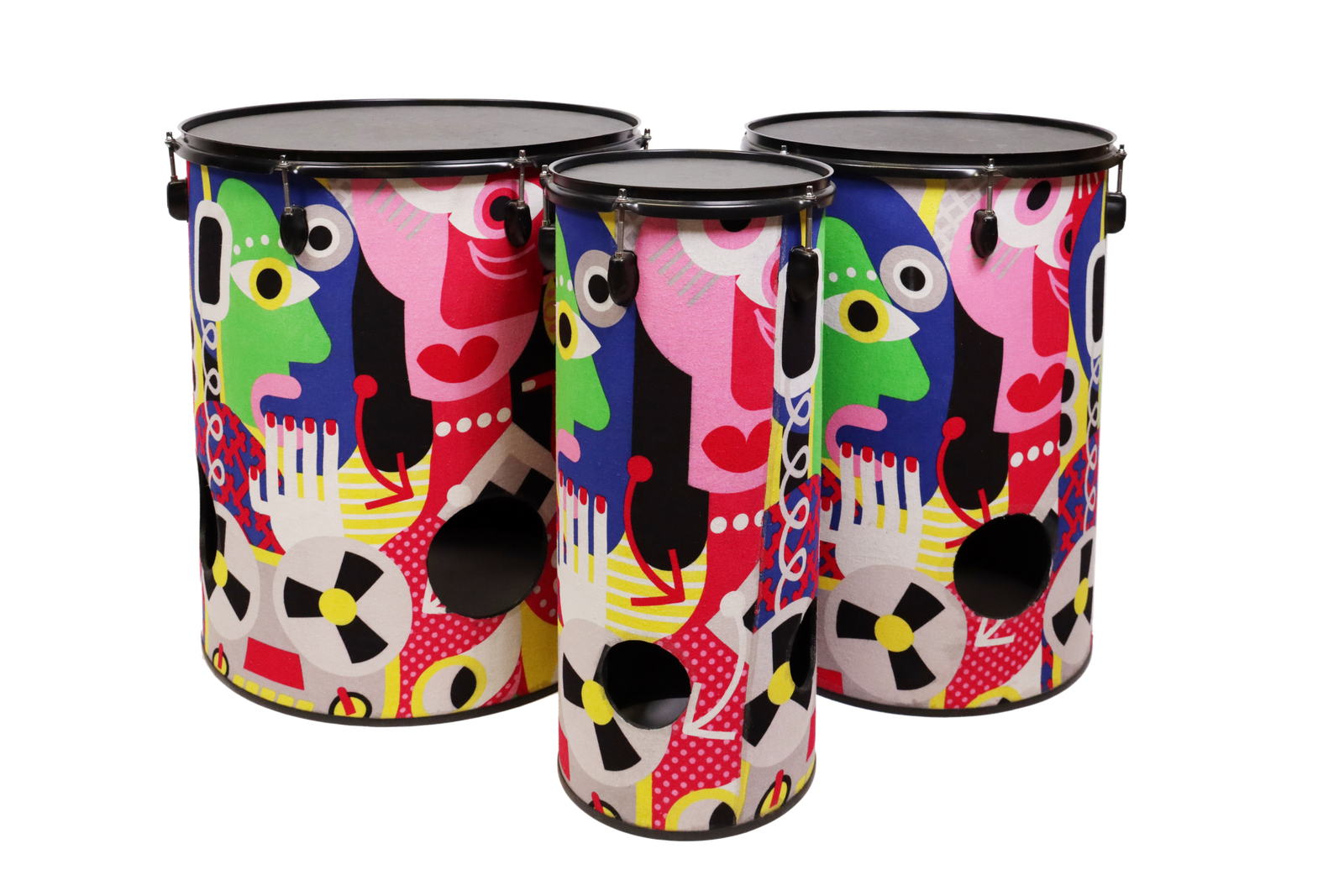
Common Latin Percussion Instruments at a Glance
This guide focuses on Latin American percussion instruments that are widely recognized and relevant to a broad percussion product range. It does not attempt to represent every regional tradition. Instead, it compares the sound and rhythm role of products that buyers can combine into a practical assortment.
| Instrument | Category | Typical Sound | Main Rhythm Role |
|---|---|---|---|
| Conga | Hand drum | Deep and resonant | Foundation and groove |
| Bongo drums | Paired hand drums | Bright and responsive | Fast rhythmic detail |
| Cajon | Box drum | Bass tone and sharp slap | Compact rhythm base |
| Claves | Wooden percussion | Short and focused | Timekeeping |
| Maracas | Shaker | Dry and continuous | Pulse and subdivision |
| Guiro | Scraper | Ridged scraping sound | Repeating texture |
| Cow bell | Metal percussion | Bright and projecting | Accents and pulse |
What Are Latin Percussion Instruments?
Latin percussion instruments are used across many Latin American and Caribbean musical settings. The category is broad because each region has its own drums, bells, shakers, scrapers, and rhythmic patterns.
Afro Cuban drums such as congas and bongos are central to many Cuban and salsa-related ensembles. Cuban percussion instruments such as claves, maracas, guiros, cabasas, and cow bells help define timing and rhythmic detail. Other Latin American percussion instruments, including cajons and agogo bells, come from different traditions but can still belong in a wider product selection.
The category should therefore be treated as a family of complementary sounds rather than one fixed kit. This approach helps buyers compare Latin percussion instruments by function, material, size, and intended use.
Latin Percussion Drums for Foundation and Groove
The drum layer gives a percussion group weight, movement, and dynamic range. Different shell sizes and playing surfaces allow several Latin percussion drums to work together without sounding identical.
Conga
The conga is a tall hand drum that can produce bass tones, open tones, slaps, and muted sounds. Among Afro Cuban drums, congas often provide the strongest rhythmic body. Buyers should compare shell material, drumhead type, tuning hardware, finish quality, height, diameter, and included stands or accessories.
Bongo Drums
Bongo drums are smaller and higher in pitch than congas. They are normally supplied as a connected pair, with the two drum sizes producing tonal contrast. Their quick response suits faster patterns and short phrases, while important purchasing details include shell construction, head material, tuning system, connecting hardware, and total weight.
Cajon
The cajon is a wooden box drum that produces deeper tones near the center and sharper sounds near the upper edge. Although its regional background differs from traditional Afro Cuban drums, it fits well in modern Latin and acoustic percussion ranges. Buyers should compare body dimensions, front-plate material, internal snare design, corner finishing, and load-bearing stability.
Cuban Percussion Instruments for Timekeeping
Drums provide power, but smaller Cuban percussion instruments often make the beat easier to follow. These products organize the pulse, mark repeated patterns, and create contrast above lower drum sounds.
Claves
Claves are a pair of wooden sticks that produce a short, focused click. Material density, diameter, length, finish, and tonal consistency all affect their response. Their clear wooden voice balances groups dominated by drumheads, shakers, and metal sounds.
Cow Bell
A cow bell produces a bright metallic attack that can cut through a mixed percussion group. It may reinforce a repeated pulse, emphasize transitions, or add a strong accent pattern. Buyers should compare bell size, wall thickness, mounting options, finish, and included beaters.
Afro Cuban Percussion Instruments for Texture
Shakers and scrapers fill the spaces between stronger beats. These Afro Cuban percussion instruments add continuous movement and help the rhythm feel complete.
Maracas
Maracas create sound as internal filling moves against the shell. They can play a steady pulse, subdivisions, accents, and more detailed shaking patterns. Wooden and plastic versions differ in weight, grip, durability, and tonal character, while handle size and balance should suit the intended user group.
Guiro
A guiro is played by scraping a stick across a ridged surface. Its dry, textured sound is clearly different from drums, bells, and shakers. A suitable model should have evenly formed ridges, a comfortable grip, and a scraper that produces a consistent response.
Cabasa
A cabasa uses metal beads around a textured cylinder. Rotating or shaking it creates a crisp, controlled sound. Compared with maracas, the cabasa often feels tighter and more precise. Buyers should compare bead movement, handle construction, cylinder size, and overall balance.
Latin American Percussion Instruments Beyond the Cuban Core
A broader range should also recognize instruments from other Latin traditions. This avoids presenting all Latin percussion instruments as if they came from one region.
Agogo Bell
The agogo bell is closely associated with Brazilian and Afro-Brazilian percussion. Models with two or more bells provide contrasting tones for repeated patterns and bright accents. Procurement points include bell spacing, pitch contrast, weld quality, finish, and beater design.
Tambourine
The tambourine appears in many musical traditions and is not exclusive to Latin music. It can still strengthen a mixed range of Latin American percussion instruments by adding jingle texture, hand strikes, and sharp accents. Important selection points include frame material, head or headless design, jingle material, grip comfort, and frame strength.
How Latin Percussion Instruments Work Together
A useful rhythm group is built through contrast. A collection made entirely of Latin percussion drums may sound powerful but lack definition, while a collection made only of shakers may have motion but not enough depth.
B2B Selection Checklist
Buyers should compare musical role and construction at the same time. The following points help distributors, retailers, education suppliers, and project teams prepare clearer product selections and inquiries.
Product Role
Identify whether each item provides foundation, pulse, texture, scraping, or accents. Avoid selecting too many products with the same function.
Materials and Construction
Check drum shells, heads, wooden bodies, metal parts, plastic components, bead systems, coatings, edge finishing, and assembly consistency.
Size and Intended User
Smaller products may suit younger players and portable ranges. Larger drums can offer stronger projection but require more storage and shipping space.
Tuning and Hardware
For Afro Cuban drums and other tunable products, inspect lugs, rims, tension systems, connecting blocks, stands, and repeat-order consistency.
Included Accessories
Confirm whether products include beaters, scrapers, stands, straps, tuning tools, or protective packaging before preparing a quotation.
Packaging and Transport
Latin percussion drums need protection around rims, heads, corners, and hardware. Handheld products should not move or scratch inside the carton.
Mixed Assortments
Combine one or two foundation drums, wooden timekeepers, a shaker, a scraper, and metal accents to create greater musical variety.
Sample Approval
Compare sound, finish, dimensions, accessory completeness, packaging, and logo placement before confirming larger production quantities.
Final Thoughts
Latin percussion instruments are most effective when drums, bells, shakers, scrapers, and wooden timekeepers perform different roles. Afro Cuban drums provide depth and momentum. Cuban percussion instruments define pulse and rhythmic detail, while shakers and scrapers add movement and texture.
For buyers, the goal is not to include every possible product. A better approach is to build a balanced range of Latin percussion instruments that covers foundation, timekeeping, texture, and accents. This makes the assortment easier to understand, compare, and adapt for different markets and music programs.
Plan a Balanced Latin Percussion Selection
Compare drums, wooden timekeepers, shakers, scrapers, bells, accessories, and mixed assortment options before preparing your next product inquiry.